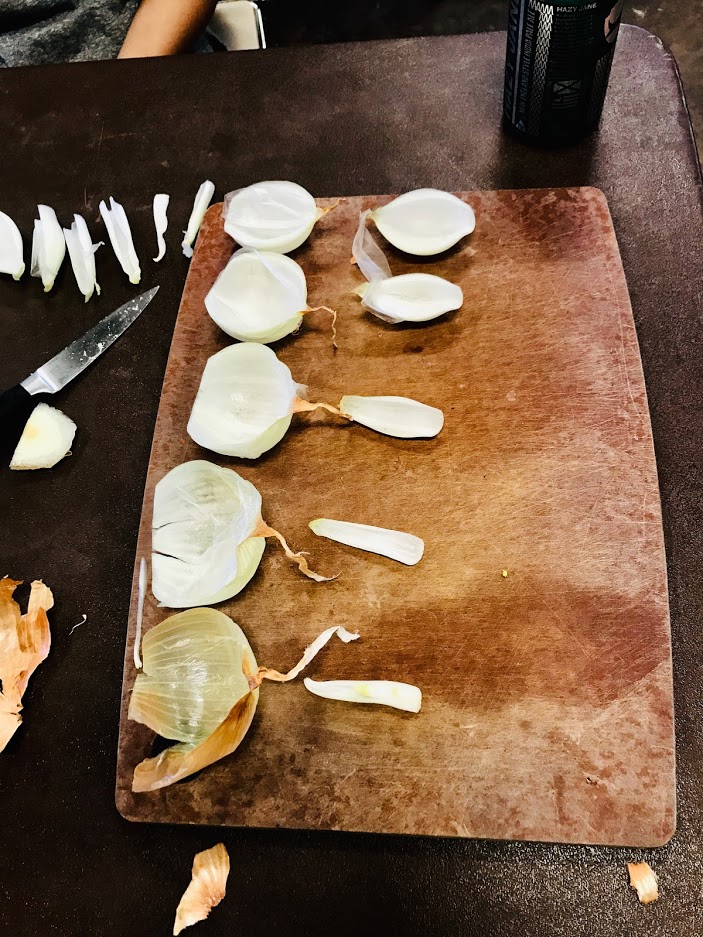
Bleary-eyed from lack of sleep, I along with eleven strangers were introducing ourselves. Not to each other—we’d already done that earlier, some of us at the Newark airport a few hours ago and some just minutes before. To onions, sitting on the tables in front of us.
Wes, clearly enjoying our bemusement, provided more directions: “Now cut the onion in half and examine it. Get to know the onion. Take it apart, one layer at a time. You are seeing something no one has ever seen before. Notice how the outer layers of the skin differ from the inner layers, and the layers of membrane in between the thicker inner layers. How do they feel? Cut a sliver and try to remove all the juice from it. Smell it. Right at this moment, you and this onion are here together, and that is called presence.”
This was back in August, after I applied for (and miraculously received) a limited spot in an experience called Cultivate. I had found out about it by pure luck, through looking up a speaker while at the Why Christian conference in April. He was Jeff Chu, and some of his recent tweets were about how Princeton Theological Seminary would be hosting a group of young adults for five days that summer.
Those tweets hit me like searchlights:
The application seemed to be asking for authentic, tell-us-who-you-really-are-and-what-made-you-that-way responses, but the questions weren’t easy to answer.
Might as well, I thought. You’ve got nothing left to lose and you really, really need something good to happen. So here goes.
———
I was eleven when I suspected I might be gay, twelve when it began to seriously concern me, and thirteen when I knew that alas, I was. I told hardly anyone—my best friend didn’t even know. My dad was a pastor and I knew what he and my mom would think. They’d taken me along to protest Prop 8 with some members of our church and other conservative Chinese-American churches in the city, waving signs and dressed in red Marriage = 1 Man + 1 Woman shirts. I remembered the pastor on the stage rhetorically asking what else we would allow if we allowed homosexuality (bestiality? pedophilia?) and having to look up the definitions later because I didn’t know what they were.
I was depressed all through high school, partly because of my punishing academic load but mostly because of what I hid. I filled countless journals with angst, alternating between praying that God would change me and vowing that I would pass this divine test and one day have a glorious testimony to share with the world. The only things that brought me joy were being on the worship team and leading a small group for the girls in the church youth group. Aside from these moments, I was incredibly lonely. It wasn’t just fear of how my parents would react keeping me from telling them. They often confided in me about their struggles in ministry, and they were going through a tumultuous time during my high school years. How could I add to their burdens? And even if I told them and they could bear it, what would happen to their ministry if other people found out? So I kept my silence.
One evening, as 2018 was coming to a close, I arrived at my parents’ house. They had invited me over for dinner, knowing I had something important to tell them. Coming out to them had been my goal for the year and I had been preparing myself for this conversation for a while. I had moved out and become completely financially independent months before, but couldn’t bring myself to ruin things when our relationship was so good at the moment. With the new year approaching, the clock was ticking. So after dinner, I finally said, “I have something I’ve wanted to tell you for a very long time.”
Shocked silence.
Me talking some more since no one else was.
More shocked silence.
Preempting certain objections, telling them that I had asked God to change me, even signed myself up for a conversion therapy program in Missouri during college (not as awful as some that exist, more like an intense Bible study where you renounced Pokémon and yoga at the end), and became somewhat of a poster child for them until realizing about two years later that I was still queer and trying to figure out how to make sense of my journey.
I was afraid to consider what it meant because if it didn’t work, then what was it all for? The story where I am saved from being gay and go on to marry myself a husband and run a ministry to LGBTQ folks wrapped up nicely. It had a bow on it. This did not have a bow on it.
I wanted that simple plot, that uncomplicated story, yet I knew that forcing myself to play a role felt wrong, so I kept searching for answers.
I read up on queer theology, I went to an event hosted by a local church that featured a famous ex-lesbian Christian (during the Q&A someone asked her what she would say to gay Christians and she replied that they were deceived and the questioner, who had been setting off my gaydar, burst into tears), I prayed, I questioned. I read about gay Christians and allies who believed they had been led by the Spirit through prayer and studying the Bible to an affirming theology and had written books about how they reached that conclusion. It was terrifying, but the more I started to let myself consider an affirming theology as a possible option, the more hope, peace, and freedom I sensed calling out to me from that direction.
Conversely, when I thought about slamming the brakes on my quest and sticking to the biblical interpretation that I had grown up with, my motivation was from fear—of hell, of being wrong, of losing important people in my life, of losing my connection with God. That sentence in 1 John 4:18 kept returning to my mind: “There is no fear in love, but perfect love casts out fear.” Over and over, I felt God asking me to trust, so I decided to let that be my guide.
It wasn’t until I realized at some point in the tangles of the novel I was working on at the time that every masterful storyteller has a plan for each character. If I called God the Author and the Editor, then it wasn’t my job to make sense of the story, just to be true to the character I’d been written as.
And slowly, I began to believe that God didn’t want to change my queer identity—He wanted me to live it. To stop trying to be someone else, who I thought others wanted me to be, who I thought I was supposed to be. Because all that He wanted me to be was the person He made me.
———
I tried, but all of this was impossible to communicate in that moment to my parents. Some things just took time. Time to see if people could change, time to find out if they couldn’t. Time to lose years of living because you wanted to be patient, you wanted to wait for them to catch up to you, but life didn’t stop and many years had already gone by without you living as yourself, and you couldn’t wait any longer. They understood that. The conversation was necessary but after that came a wave of sadness that just wouldn’t let up. It didn’t help when my cat of fifteen years died two weeks later. For the first half of 2019, it felt as if there was a shadow looming behind my shoulder, waiting to fall over me every time I so much as half-smiled.
Finding out in June that I got into Cultivate was a lifeline, and I managed to cling on by my fingernails until August. For five days, I spent time with fascinating new friends, sowed seeds in the rain, carved a wooden spoon, shoveled compost, looked at compost, harvested chard, fennel, and cherry tomatoes, weeded, sang spontaneously, ate sumptuous meals grown with very local ingredients, served communion to the people next to me, chased goats and chickens, sat by a stream, roasted humongous marshmallows over a fire, watched sunsets, and discerned my vocation. Strangest and most wonderful was the overwhelming experience of being so cared for. Several times I wondered: Is this what it’s like to be Queer Eye’d?
The last night, as we were sitting outside under trees strewn with lights at a feast-laden table set with candles and flowers, I suddenly found myself deeply moved by all the love and attention that had gone into preparing this place for me. It had been life-giving to be around people who had tended to me, loved me, seen me. For months I hadn’t felt like myself—after those five days, it felt like I was finally coming home.
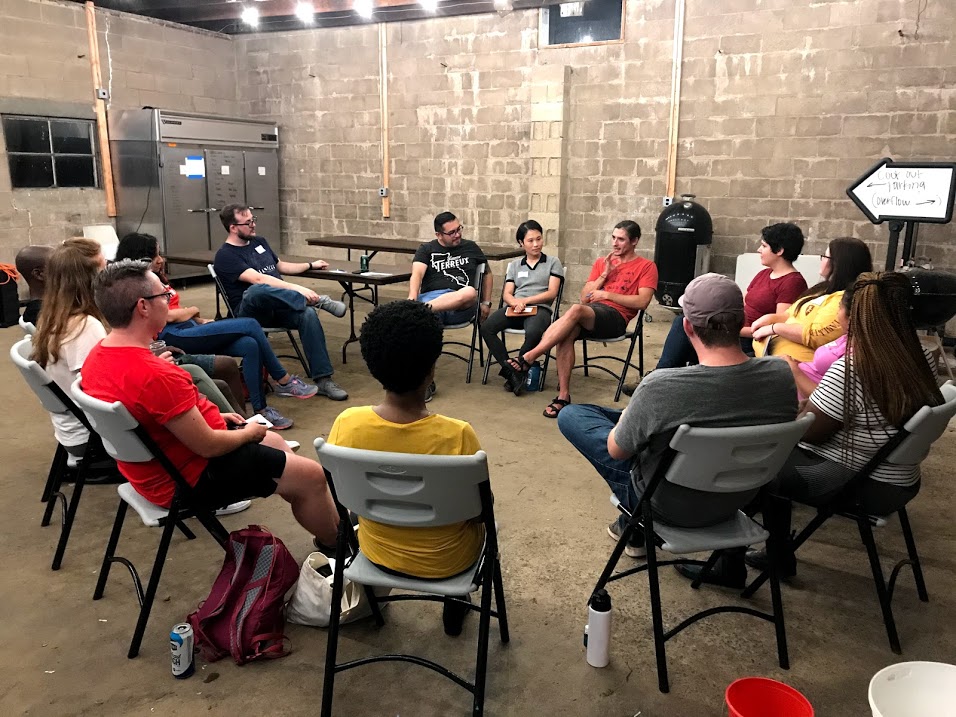
Photo by Hana Lehmann. 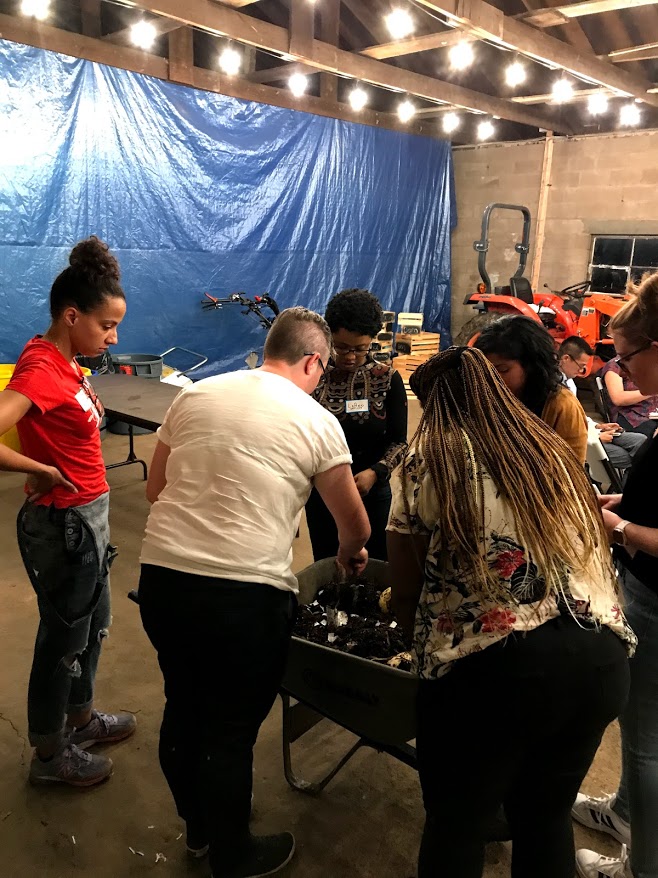
Getting up close and personal with compost! Photo by Hana Lehmann. 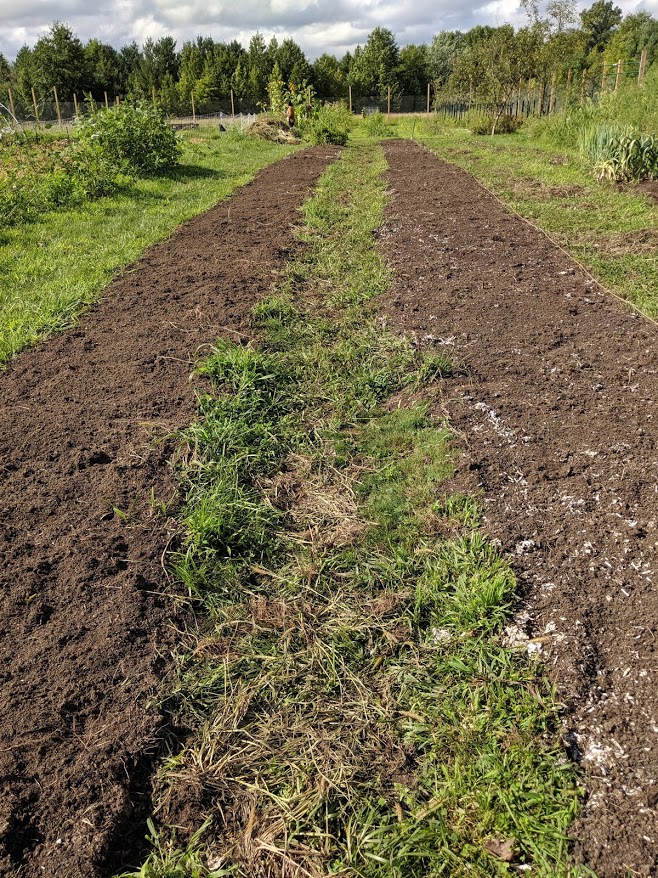
Soil beds we prepared. 
The good stuff. Photo by Hana Lehmann. 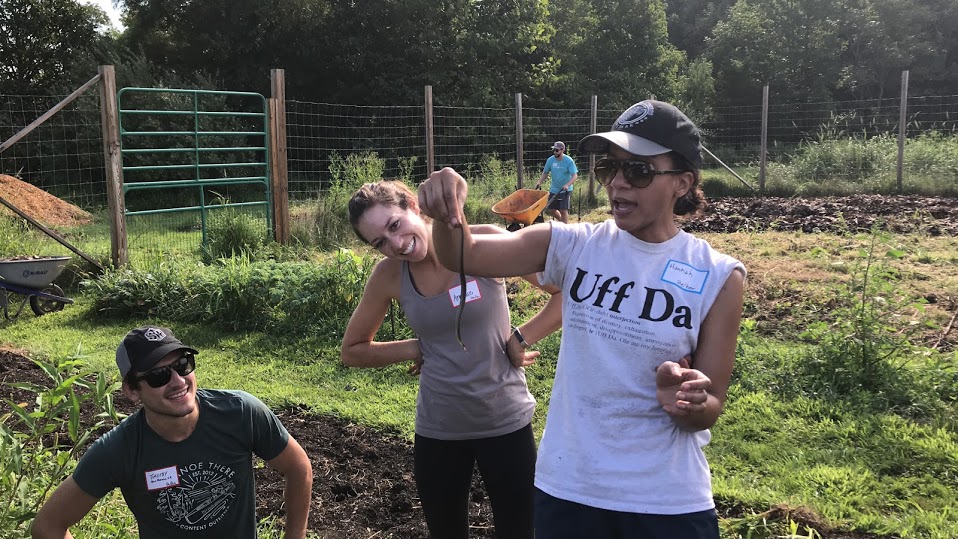
I’m honestly not sure what’s happening here, but this is Tim, Annalise, Hannah, and Anderson in the back. Photo by Hana Lehmann. 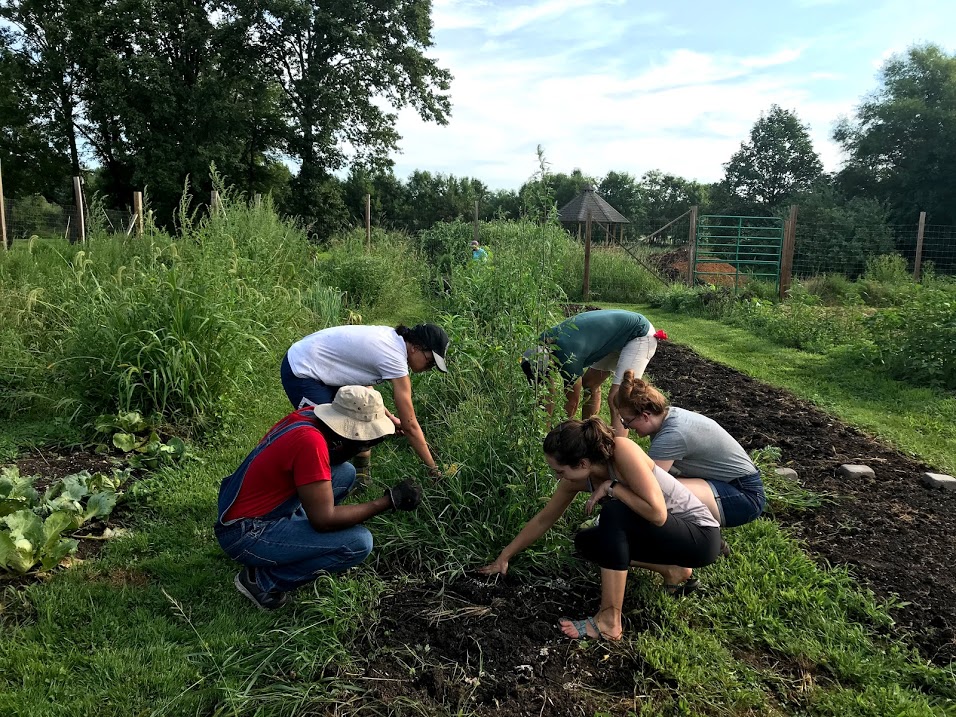
Removing the cover crop. Photo by Hana Lehmann. 
Jeff showing us how to harvest fennel. 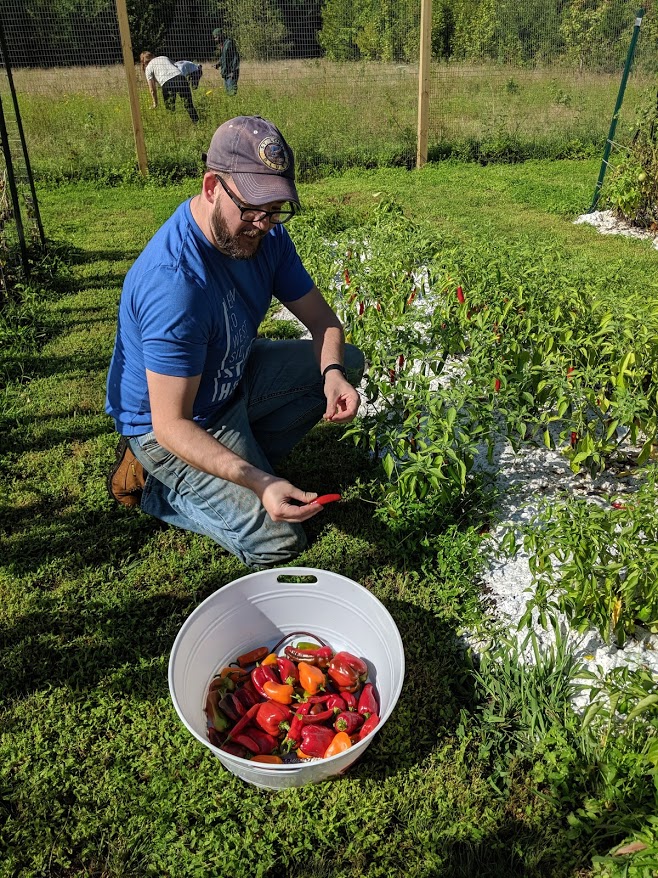
Michael harvesting peppers. 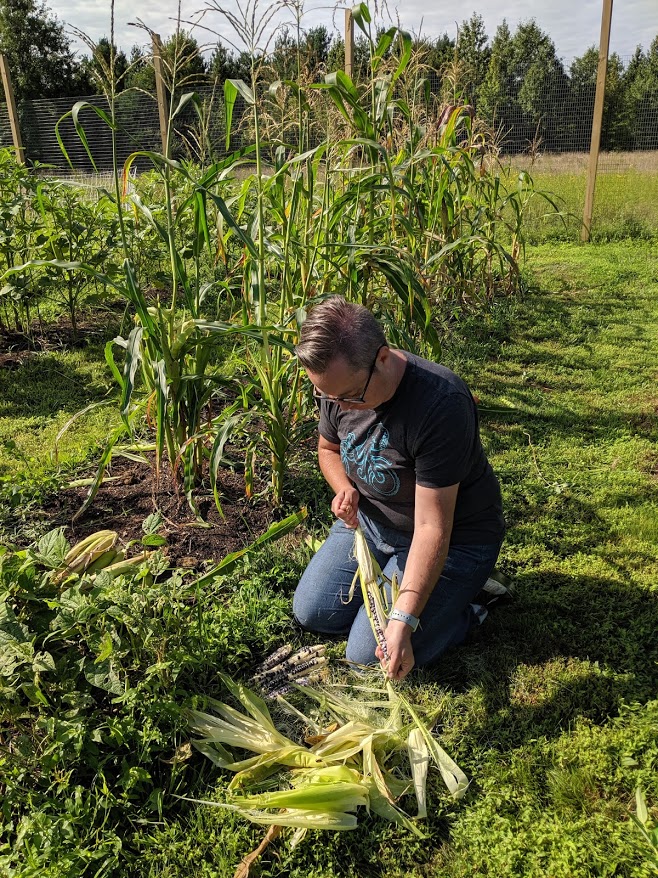
Mees harvesting native corn. 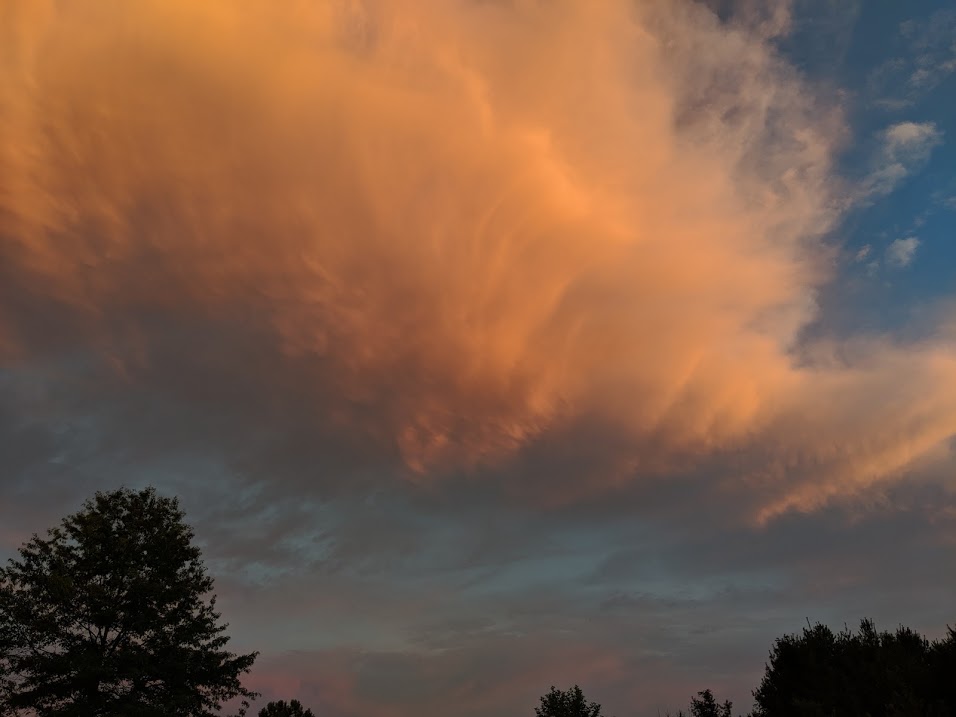
A glorious sunset over our heads at dinner one night. 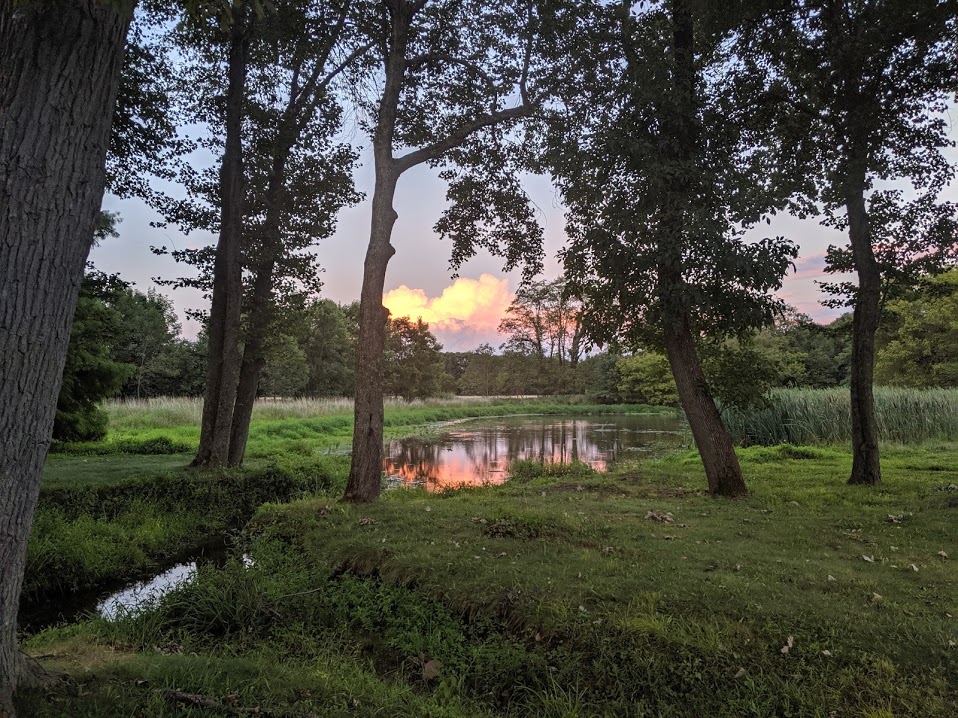
The sun setting over the pond. 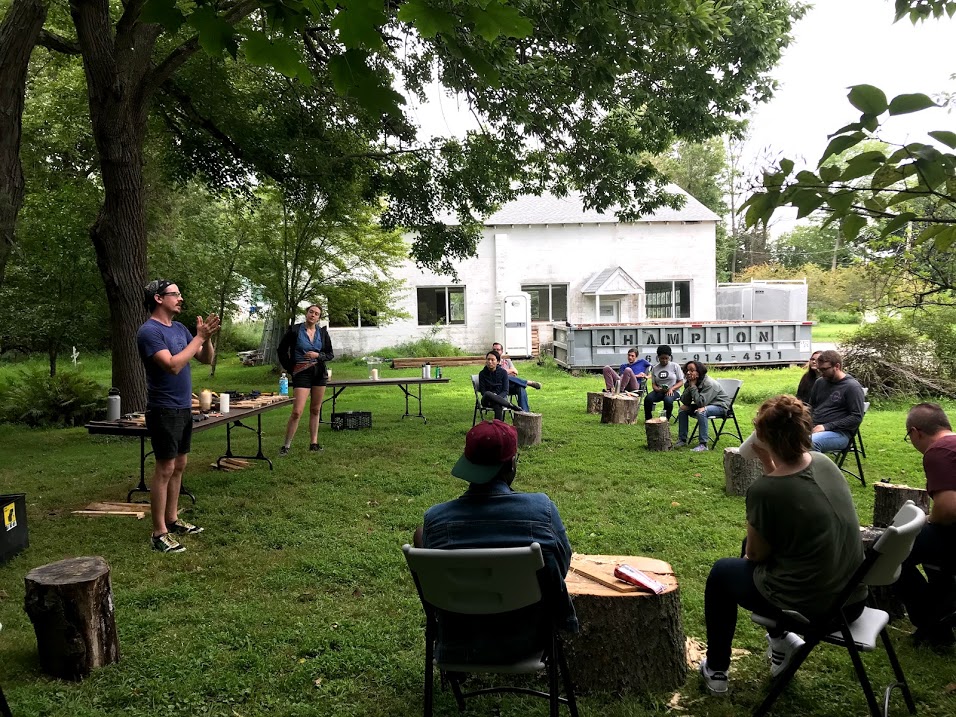
Learning how to carve spoons. Photo by Hana Lehmann. 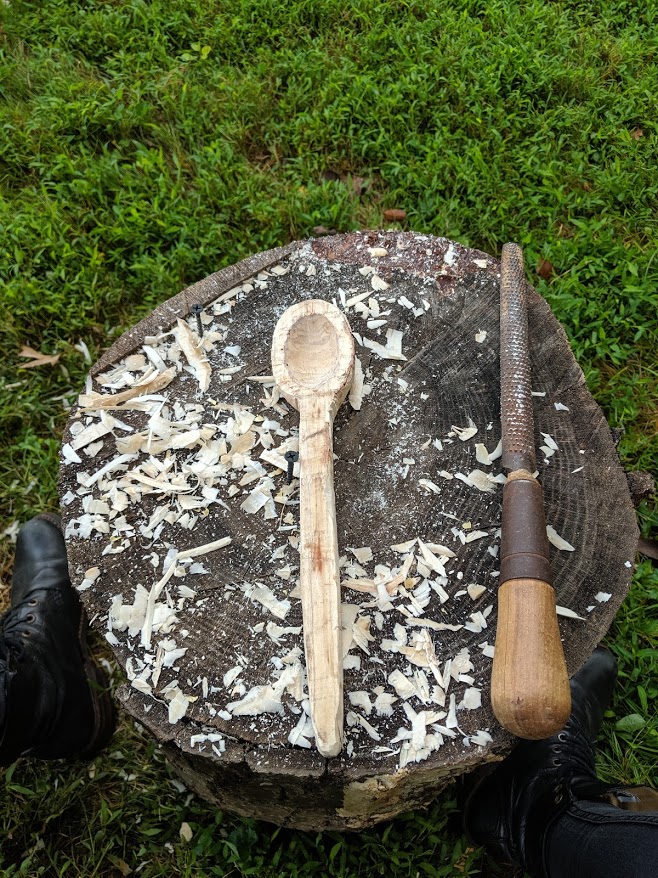
My unfinished spoon. 
Chickens. 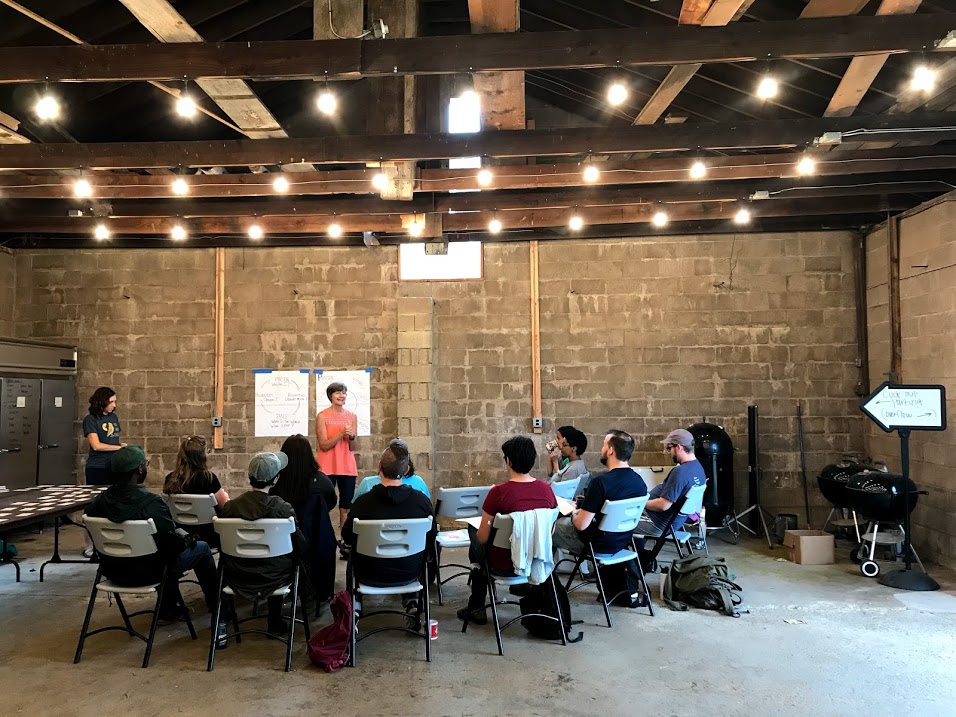
Barb dropping self-knowledge on us. Photo by Hana Lehmann. 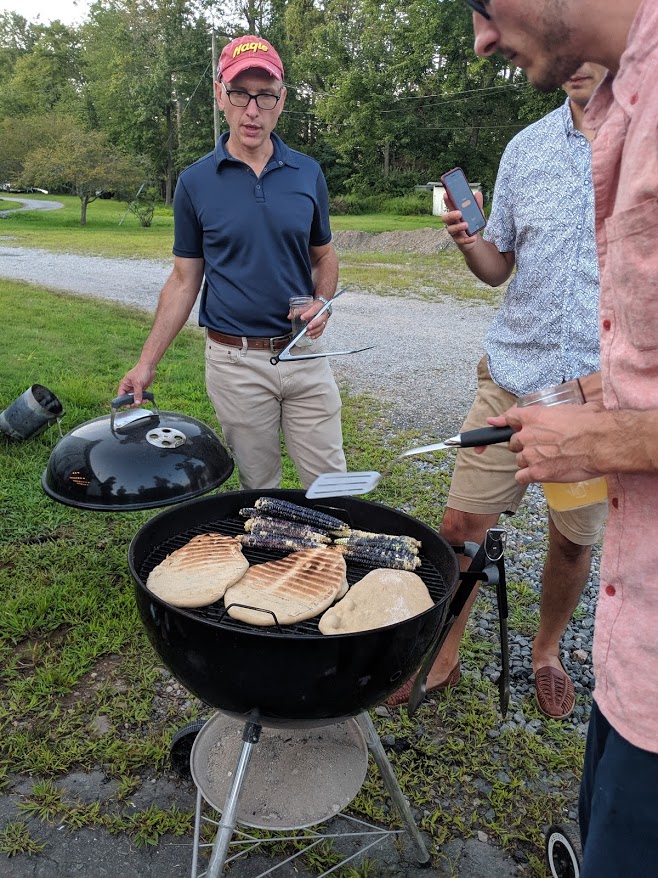
Nate, Wes, and Tim at the grill. 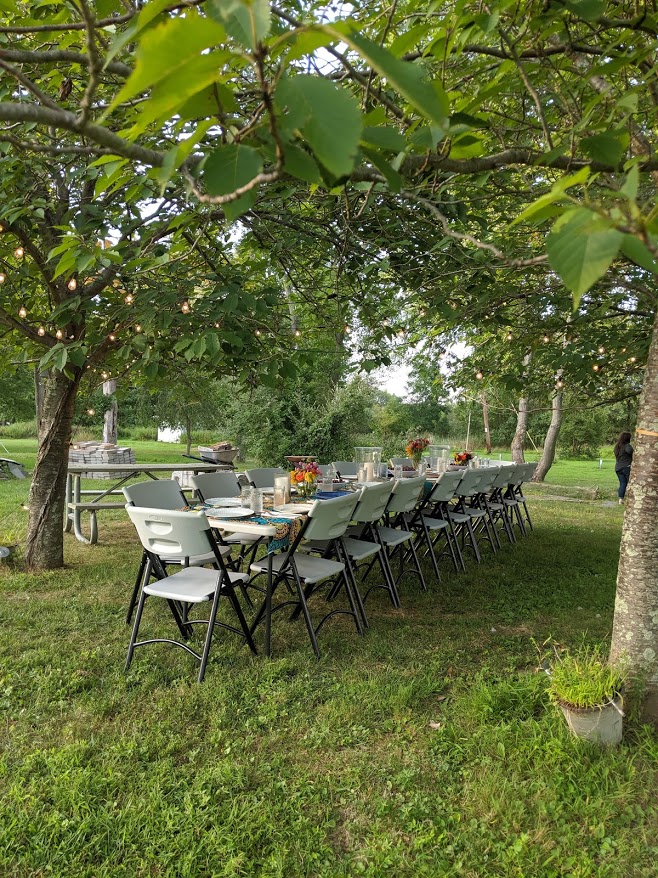
The table, set for our last dinner together. 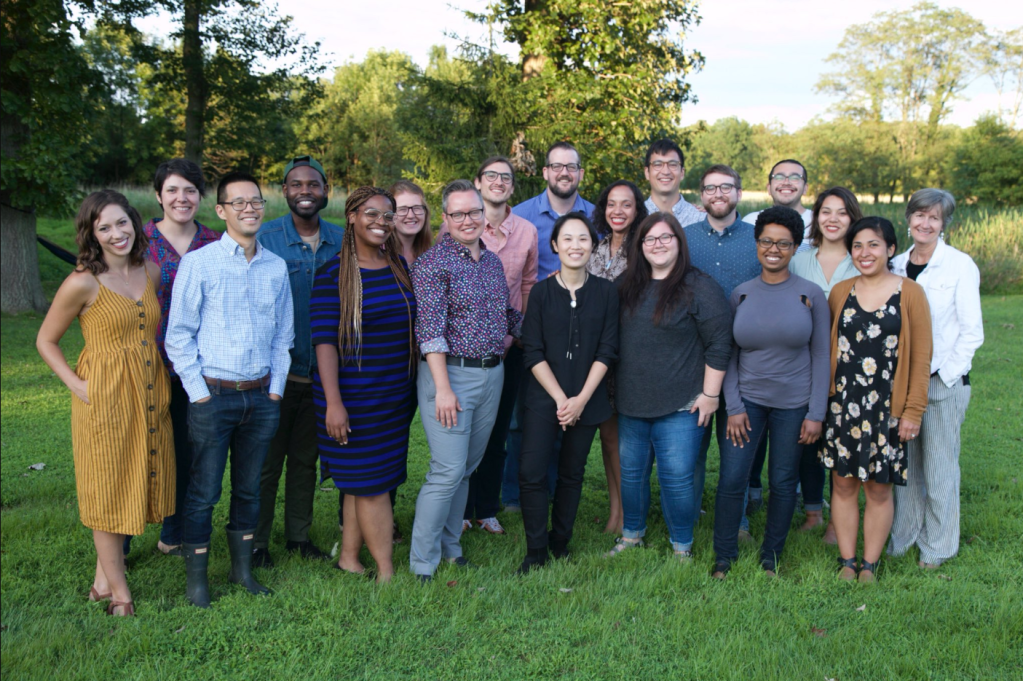
The Cultivate crew. From left to right: Annalise, Cecilia, Jeff, Maco, Pearl, Claire, Mees, Tim, Michael, me, Hannah, Sanne, Wes, Anderson, LeAnn, Werner, Hana, Jen, and Barb.
Two weeks later at Oakland Pride with Haven, the affirming church in Berkeley I had been attending for the past year, that feeling of home was still there. I felt it as we were putting last minute touches on our parade float, a church with rainbow stained glass windows and rainbow streamers bursting out of the steeple. I felt it walking in the parade beside our float blasting the playlist of LGBTQ affirming songs I had helped curate, while the children of our church ran around handing out candy to people on the sidelines. I felt it as I put on my Haven-issued shirt and saw others in theirs, with the words “What’s church without all the patriarchal, heteronormative, white-supremacist, bullsh*t? We’re working on that” or “Female leadership. LGBTQ inclusion. Racial justice. And Jesus” on the backs.
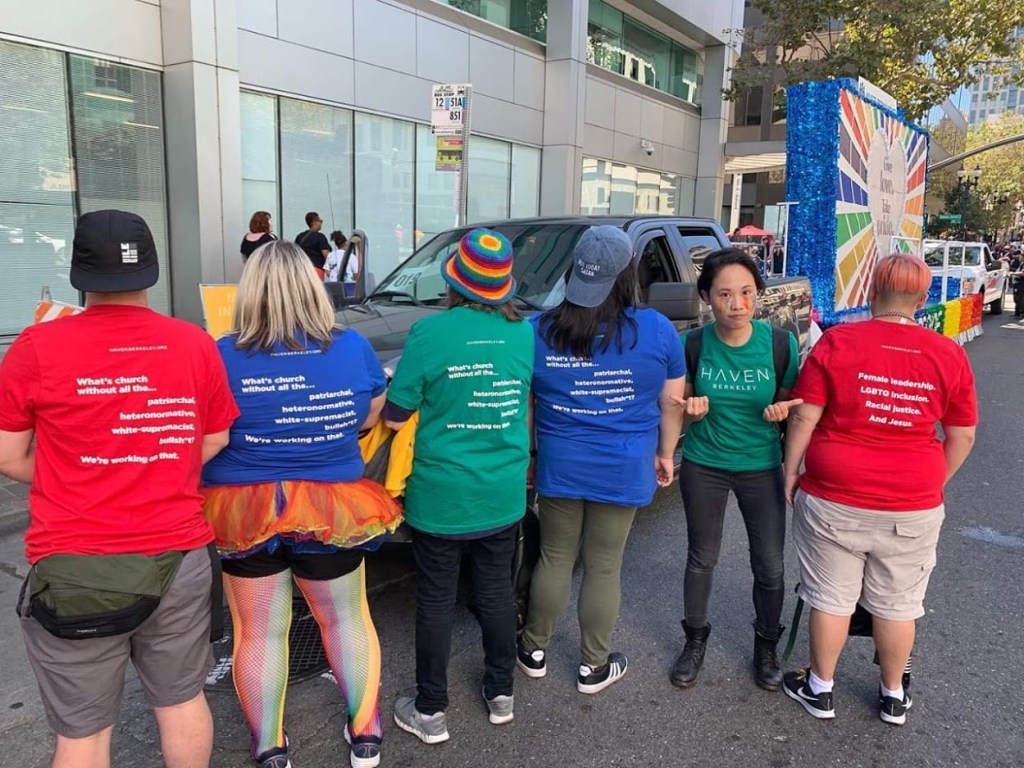
Queer Trans group rocking our t-shirts. 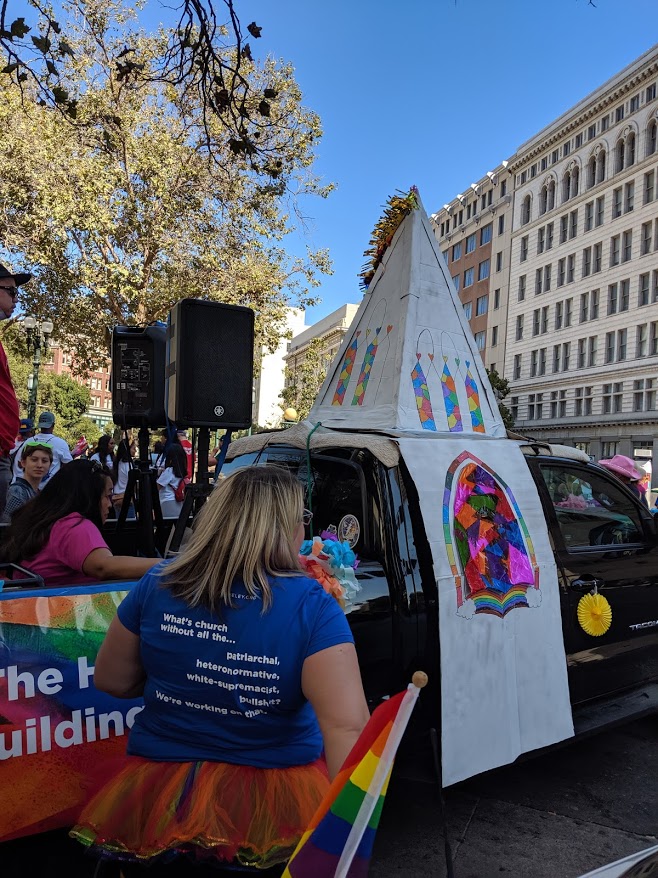
Our float! 
Our contingent before the parade started.
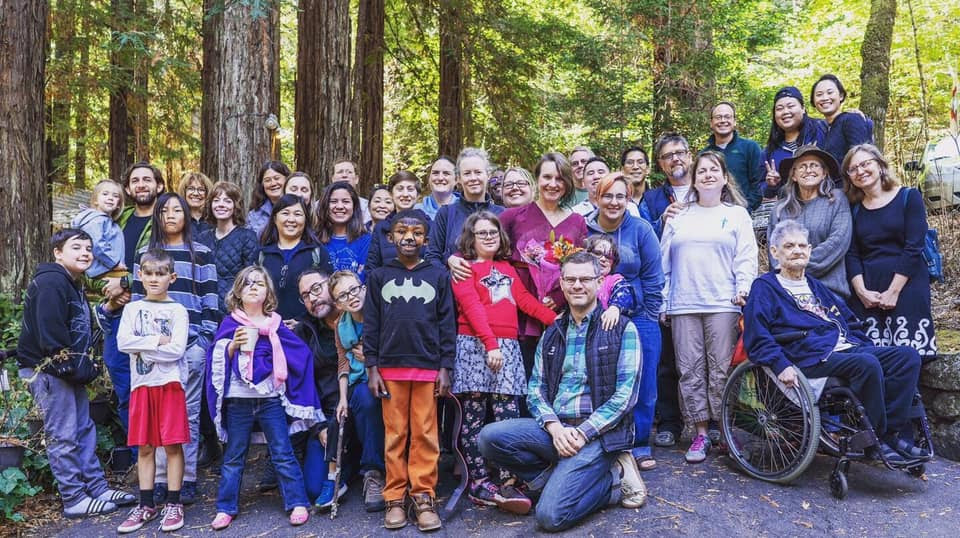
I felt it when I was a part of the Queer-Trans service that following Sunday which was completely planned and led by the queer and transgender members of Haven, as I shared my experience of being a queer Christian, shared my understanding of the word “home,” led a worship song, and read the collaborative poem I put together. I felt it a couple weeks later at Haven’s retreat, where I saw that someone had put up a sign saying “Welcome to Haven” and another sign with what I had shared at the service as my personal definition of home ever since I saw it on a chalkboard in my friends Celia and Aaron’s house: “You belong here.” I felt it all that weekend, as I shared conversations with people I was still getting to know but who were already starting to matter a lot to me. I felt it at the retreat talent show as everyone, dressed in outrageous costumes pillaged from the attic, did their act—laughing at the endearing Bible joke skit performed by the DeWitt family, cheering on the kids as they danced and put on skits of their own, crying along with everyone else as Connie and Jan, who had been married 16 years in three different ceremonies, had their first dance to Moon River. I felt it around the campfire on the last night as we sang songs and roasted hot dogs, surrounded by redwood trees. I felt it on the last day in a sacred ceremony as our pastor, Leah, had her ordination officially transferred from the church in Iowa that sent her out to Berkeley to start Haven, and I was asked to give her a pastoral charge. I felt it back in town the next day, when I saw Nadia Bolz-Weber’s tweet: “I’m Home and I’m loved.” I felt it a few months ago toward the end of a Haven small group gathering when I looked around the room at everyone talking and lingering, and realized it had never been so easy to be myself in a church before.

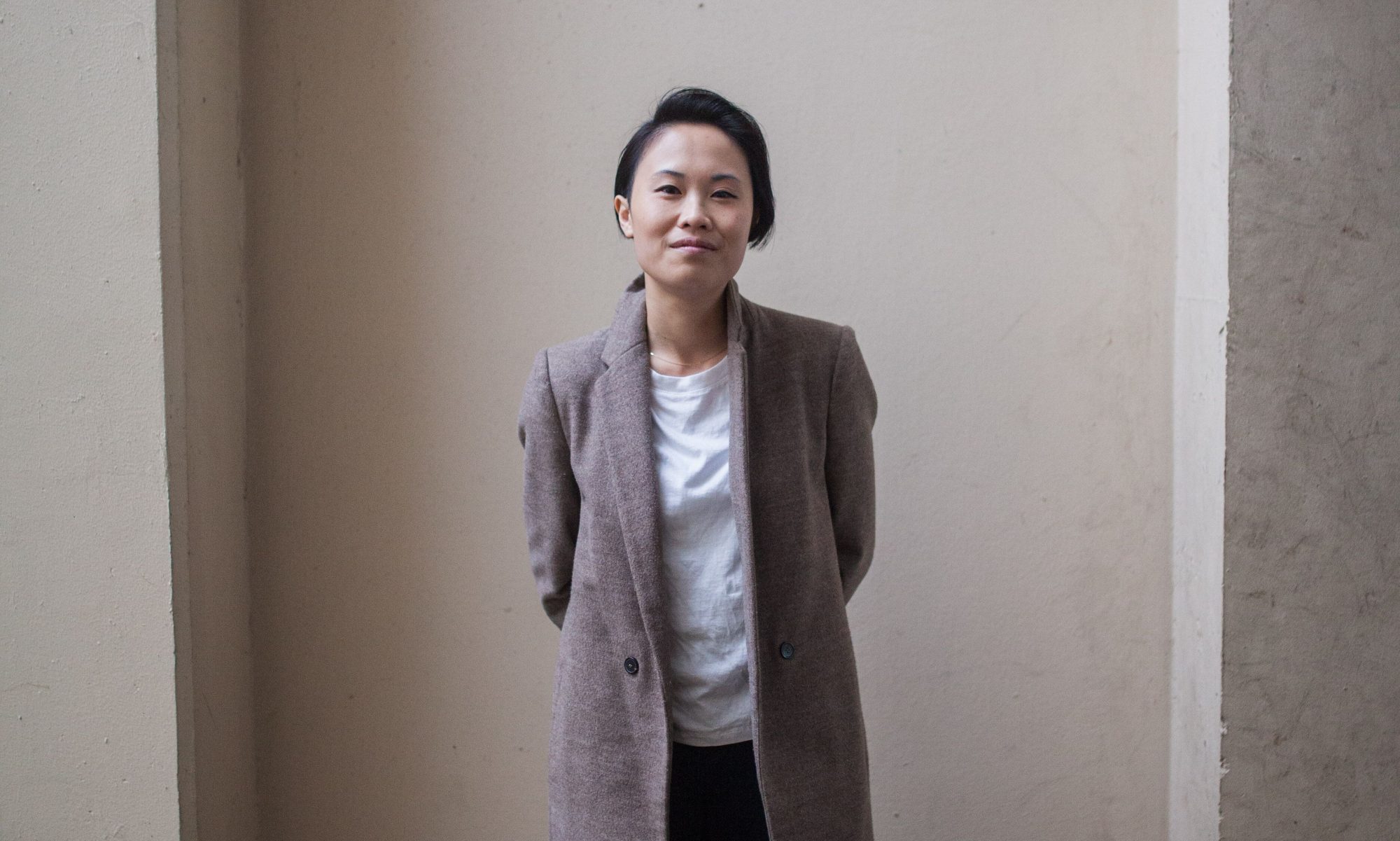
And now, I’m finally introducing myself as myself for the first time:
Hi. I’m Phoebe.
Who am I?
I’m home and I’m loved.
 PHOEBE AU-YEUNG
This is so beautiful, Phoebe. Thank you for sharing it with me. Home and loved. Amen.
LikeLike
Thanks for reading, Matt! I’m so glad that we’ve connected.
LikeLike